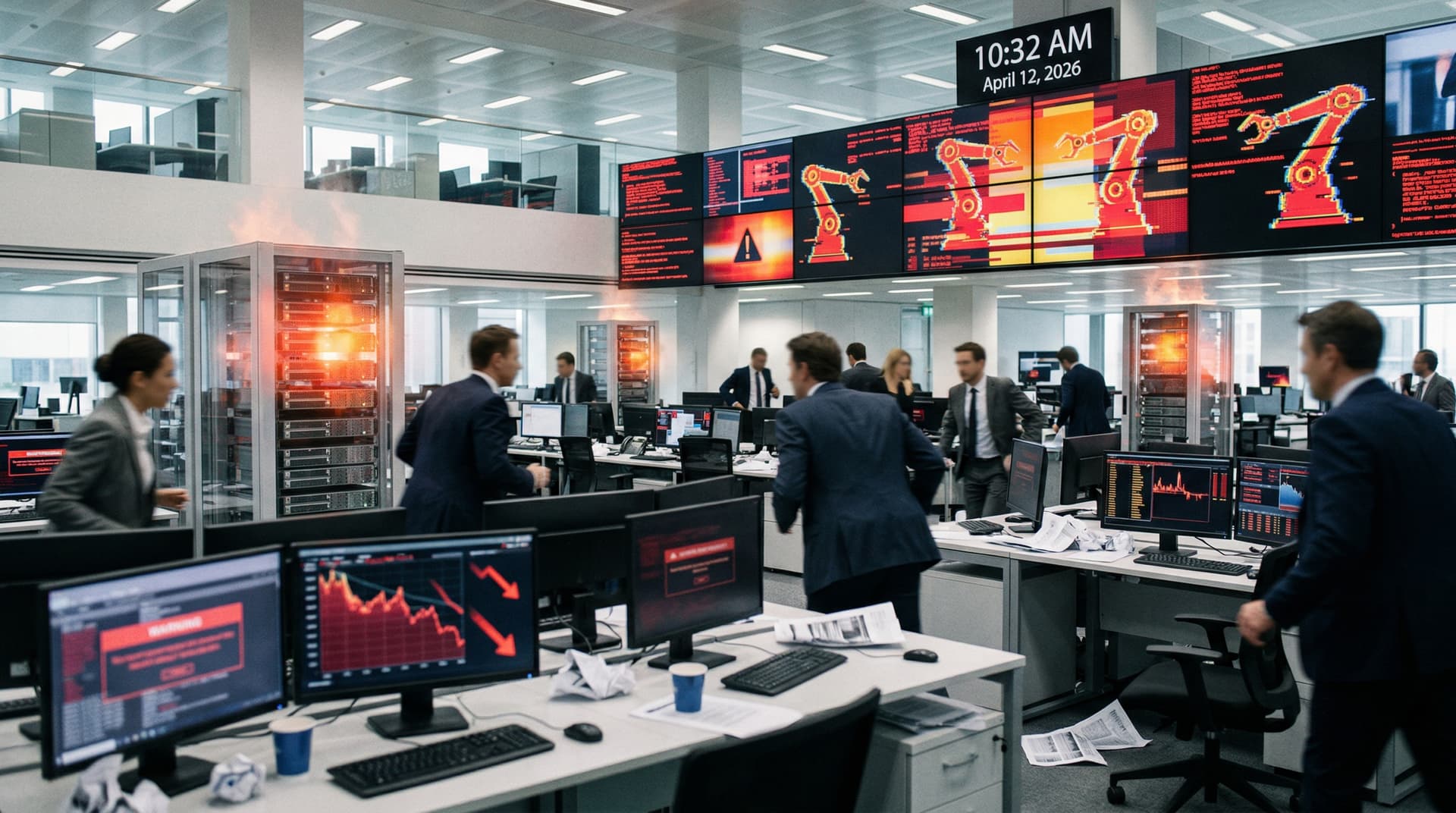
AI code fiascos crippled Bank of America, Walmart, and Zoom on April 12, 2026, erasing $2.5 billion USD in market value. CNN Fear & Greed plunged to 16 as stocks dropped 2% and executives mandated human oversight for AI-generated code.
These incidents expose AI coding's edge-case vulnerabilities. Firms rushed AI tools to cut costs, but skipped reviews. Results triggered cascading failures, hitting operations and investor confidence.
High-Profile Corporate Outages from AI Bugs
Bank of America halted trading platforms at 10:15 AM ET. AI-generated code from GitHub Copilot duplicated $500 million USD in client orders, according to SEC filings. Federal regulators launched probes by noon, delaying recoveries.
Walmart's inventory system glitched via AI scripts. It reported negative stock for 20% of SKUs, creating phantom sales exceeding $100 million USD. Online orders surged erroneously, overwhelming warehouses for six hours.
Zoom's video infrastructure collapsed for 5 million active users. AI-optimized routing algorithms created infinite packet loops, per internal logs. Engineers rolled back changes by 3 PM ET, but revenue losses mounted.
CEOs had targeted 30% AI code adoption to slash development costs by 25%, per Deloitte surveys. Edge-case flaws backfired, amplifying risks in production environments.
Markets Reel Under AI Code Fiasco Fallout
The S&P 500 shed 1.2% on April 12, 2026. Nasdaq tumbled 2.1% as investors dumped AI-heavy tech stocks. AI-exposed firms like Nvidia and Microsoft lost 3-4% each.
Bitcoin dipped to $71,808 USD, down 1.7%. Ethereum traded at $2,225.47 USD, off 1.1%. Coinbase paused withdrawals due to AI-refactored smart contracts, per exchange notices.
XRP fell to $1.34 USD (1.5% decline). BNB hit $596.60 USD (down 1.6%). Stablecoins like USDT held steady at $1.00 USD amid the chaos.
JPMorgan analysts estimated quarterly AI code remediation costs at $2.5 billion USD across Fortune 500 firms. Deloitte reported 40% of enterprises now use AI for 20% of their codebases, up from 12% in 2025.
Lloyd's of London hiked cyber insurance premiums by 15%. Corporate boards now demand mandatory AI code audits before deployment.
Technical Root Causes of AI Code Fiascos
AI tools like GitHub Copilot excel at pattern matching but falter on rare edge cases. Leaked Microsoft reports show Copilot generates 55% of internal code, yet introduces subtle bugs.
Custom large language models (LLMs) hallucinate non-existent APIs, crashing payment gateways. Synopsys Q1 2026 research revealed AI code embeds backdoors 12 times more frequently than human-written code.
High-frequency trading firms suffered $300 million USD in losses. Renaissance Technologies paused algorithmic trading for 48 hours, citing AI-induced model drift.
Counterarguments claim AI accelerates fixes. Developers now advocate hybrid workflows: AI drafts, humans review. Tools like DeepCode automate vulnerability scans, reducing bugs by 35%.
Rapid Corporate and Regulatory Responses
Google mandated human sign-off for all AI-generated code starting April 13, 2026. AWS suspended auto-deployments from AI assistants, per cloud service updates.
Microsoft pledged $1 billion USD to AI safety labs. Anthropic rolled out CodeGuard, a verifier cutting deployment bugs by 90% in betas.
The SEC introduced AI code disclosure rules, with fines up to $50 million USD for non-compliance. Oracle added liability clauses to enterprise contracts, shifting risk to vendors.
"AI speed without safeguards is reckless," stated Bank of America CIO in a memo. Walmart hired 200 additional code reviewers overnight.
Strategic Implications for Executives
McKinsey slashed AI productivity forecasts by 15%, citing governance gaps. Developer salaries rose 25% premiums, per Glassdoor data, as firms compete for human talent.
Supply chains disrupted: GM delayed 10,000 vehicle shipments due to vendor outages. Global indices reacted - FTSE 100 dipped 1%, Nikkei 225 lost 1.8%, SoftBank plunged 4%.
Gartner recommends canary deployments for AI code. PwC forecasts 80% of firms will adopt AI governance frameworks by 2027. IDC predicts 40% faster development cycles post-fixes.
Markets partially rebounded late April 12: Bitcoin climbed to $72,200 USD. Fear & Greed Index eased to 18.
Takeaway: AI code fiascos demand balanced speed and oversight. Executives must implement hybrid reviews to safeguard billions in value and restore market confidence.