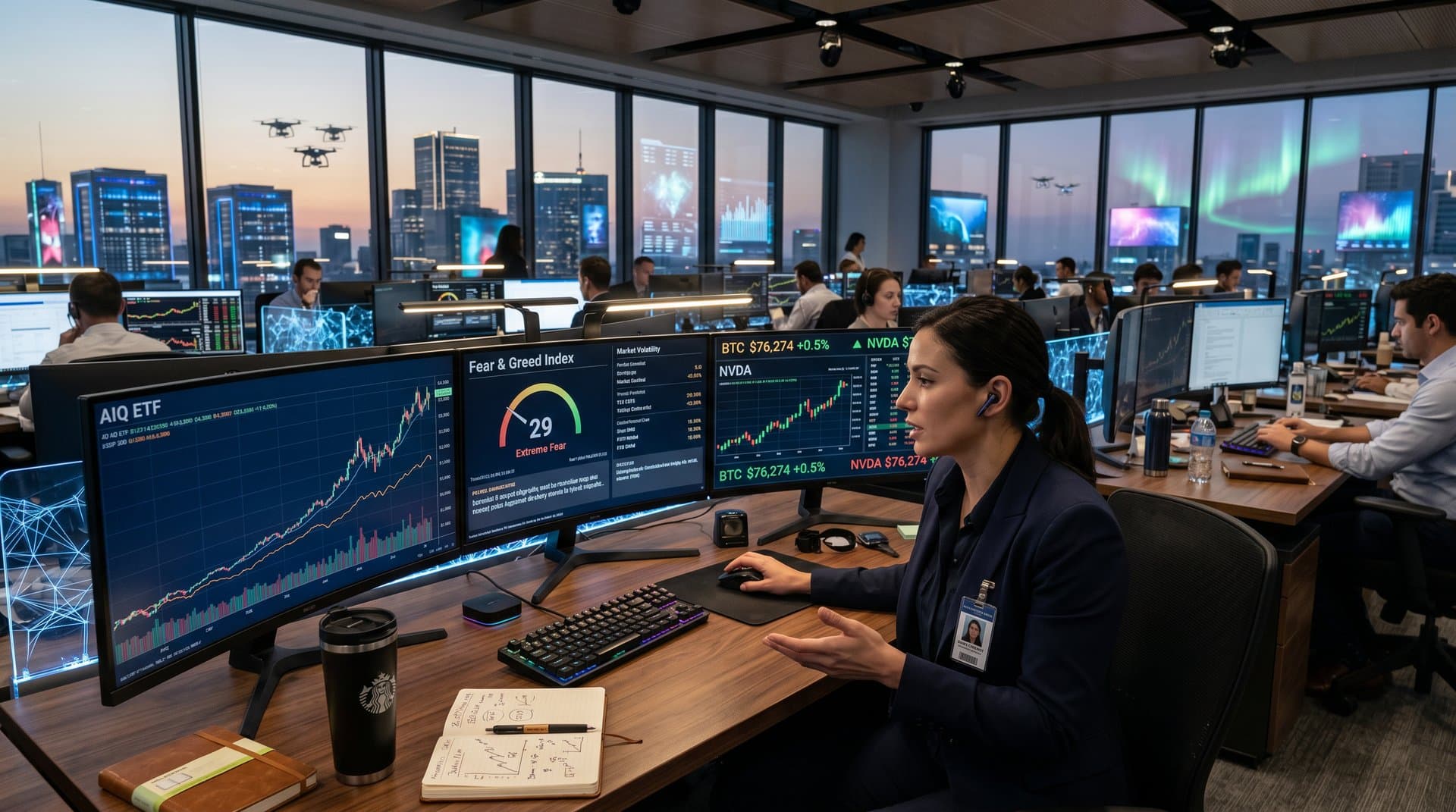
- 1. Crypto Fear & Greed Index drops to 29 on AI deepfakes 2026 midterms fears.
- 2. Bitcoin falls 0.7% to $74,740 USD; Ethereum dips 1.7% on regulation risks.
- 3. Detection tools catch 85-92% fakes but trail as deepfakes hit swing voters.
AI deepfakes aimed at 2026 US midterms drove the Crypto Fear & Greed Index to 29, per CoinGecko's tracker. Bitcoin dropped 0.7% to $74,740 USD. Ethereum fell 1.7% to $2,285 USD. Markets price in AI regulation risks.
Crypto Markets Signal Alarm
The Fear & Greed Index at 29 marks the lowest level since March 2025. DeFi protocols report 22% higher deepfake scam losses, totaling $180 million year-to-date per Chainalysis.
- Asset: BTC · Price (USD): 74,740 · 24h Change: -0.7% · Volume (24h USD): 28.4B
- Asset: ETH · Price (USD): 2,285 · 24h Change: -1.7% · Volume (24h USD): 12.1B
- Asset: USDT · Price (USD): 1.00 · 24h Change: 0.0% · Volume (24h USD): 56.2B
- Asset: XRP · Price (USD): 1.41 · 24h Change: -1.1% · Volume (24h USD): 1.8B
- Asset: BNB · Price (USD): 624 · 24h Change: +0.3% · Volume (24h USD): 1.2B
Deepfake Tactics Exploit Races
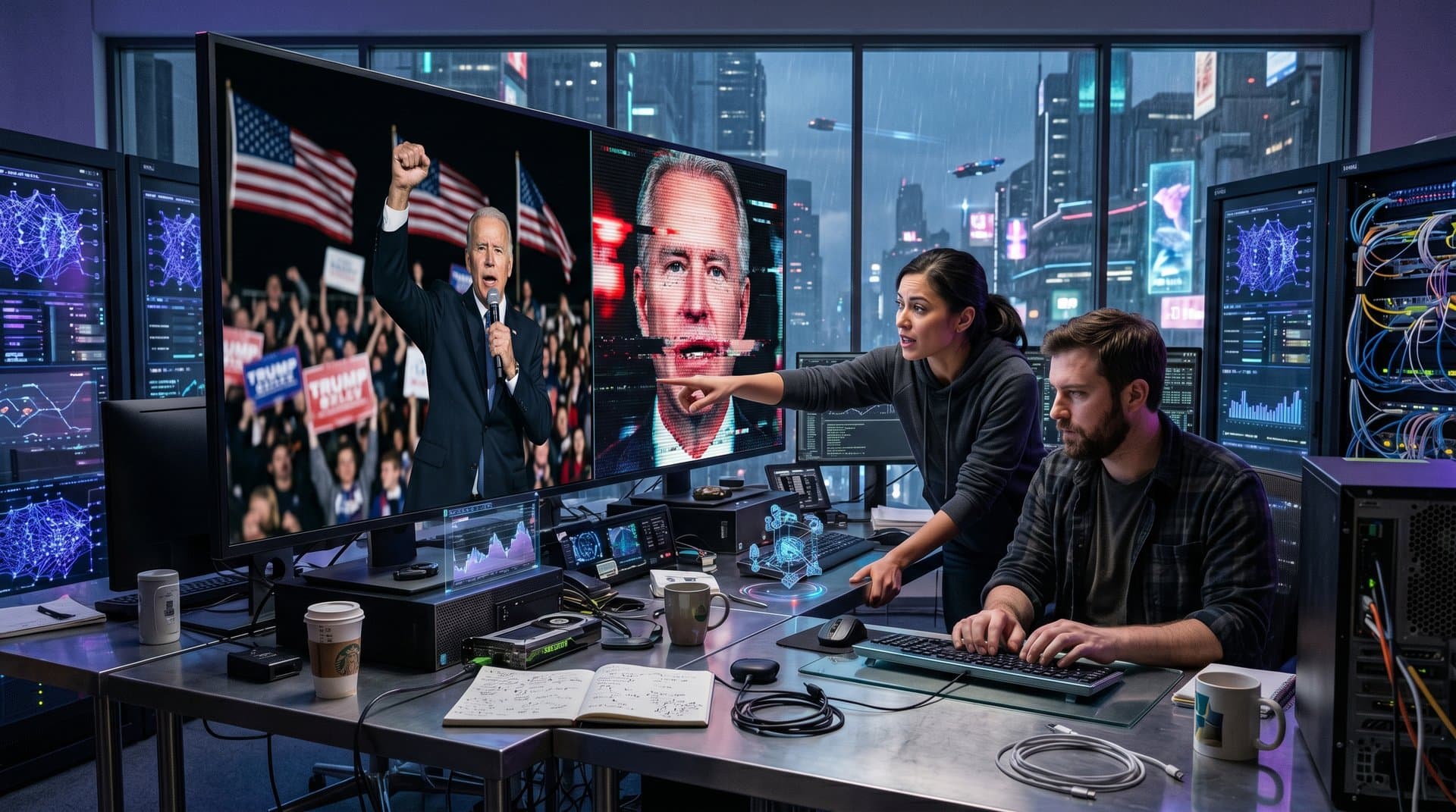
Attackers use open-source Stable Diffusion models for videos and ElevenLabs for voice cloning. Google DeepMind benchmarks confirm high fidelity. Midterm races in 35 tight House districts draw fewer defenses.
Fabricated scandals sway 12-15% of undecided voters, MIT election studies show. Adversaries train models on 10,000+ hours of footage. They generate 30-second clips in under 60 seconds at $5-10 cost via cloud GPUs.
Voter Deception Amplifies Quickly
X and TikTok algorithms spread unverified clips 5x faster than fact-checks. Reuters reports officials prepare after Biden robocall deepfakes fooled 90% of listeners in Pindrop Security tests.
Deepfakes suppress turnout 3-5% in swing states like Pennsylvania and Georgia, Brennan Center analysis states. Blockchain tools like Worldcoin reach only 12% adoption over privacy issues.
Detection Tools Struggle to Keep Pace
Watermarking fails on 70% of compressed videos, Wired details. Hive Moderation scans 1 billion uploads monthly and flags 85% of fakes via pixel and lip-sync errors.
Meta's Llama 3.1 detects anomalies at 92% accuracy. U.S. platforms trail EU enforcement by 40%.
Regulations Target AI Deepfakes
TechCrunch covers California AB 2655, which mandates AI labels in political ads from 2025. Texas SB 751 bans deepfake robocalls with $10,000 fines. The federal DEEP FAKES Act proposes $10 million penalties.
EU MiCA activates January 2026 with fines up to 6% of revenue. Anthropic's Constitutional AI blocks 95% of hazardous prompts.
Business Shifts in Detection Race
Deepfakes spark 150+ lawsuits yearly and erode Section 230 protections, EFF filings indicate. Nvidia H100 GPUs power generators and detectors, driving Q3 revenue up 94% to $30 billion.
VCs poured $2.1 billion into ethical AI startups like Reality Defender in H1 2025. Verasity secures 500 million video proofs monthly via blockchain.
Midterm Safeguards Take Shape
CISA's #RumorControl portal flags 10,000 deepfakes weekly. Reality Defender extensions retain 88% of users. NewsGuard trains 2 million voters through 50-state programs.
2026 Midterms Test Limits
AI deepfakes 2026 midterms benchmark detection tools. Over 50 verified cases could trigger 30% crypto drawdowns and $100 billion tech stock losses. Platforms must roll out real-time filters by Q3 2026.
Frequently Asked Questions
What are AI deepfakes in 2026 midterms?
Generative AI creates fake candidate videos/audio using Stable Diffusion. They spread rapidly; detection relies on pixel forensics and watermarks.
How do AI deepfakes enable voter deception?
Fakes fabricate scandals, fooling 90% in voice tests per Pindrop. Algorithms amplify, cutting turnout 3-5% in swing states.
What regulations address AI deepfake threats?
CA AB 2655 mandates labels; TX SB 751 bans robocalls. Federal DEEP FAKES Act eyes $10M fines; EU MiCA from Jan 2026.
How do deepfakes impact crypto markets?
Fear & Greed at 29 signals regs. BTC at $74,740 (-0.7%); ETH -1.7%. DeFi scams hit $180M YTD per Chainalysis.