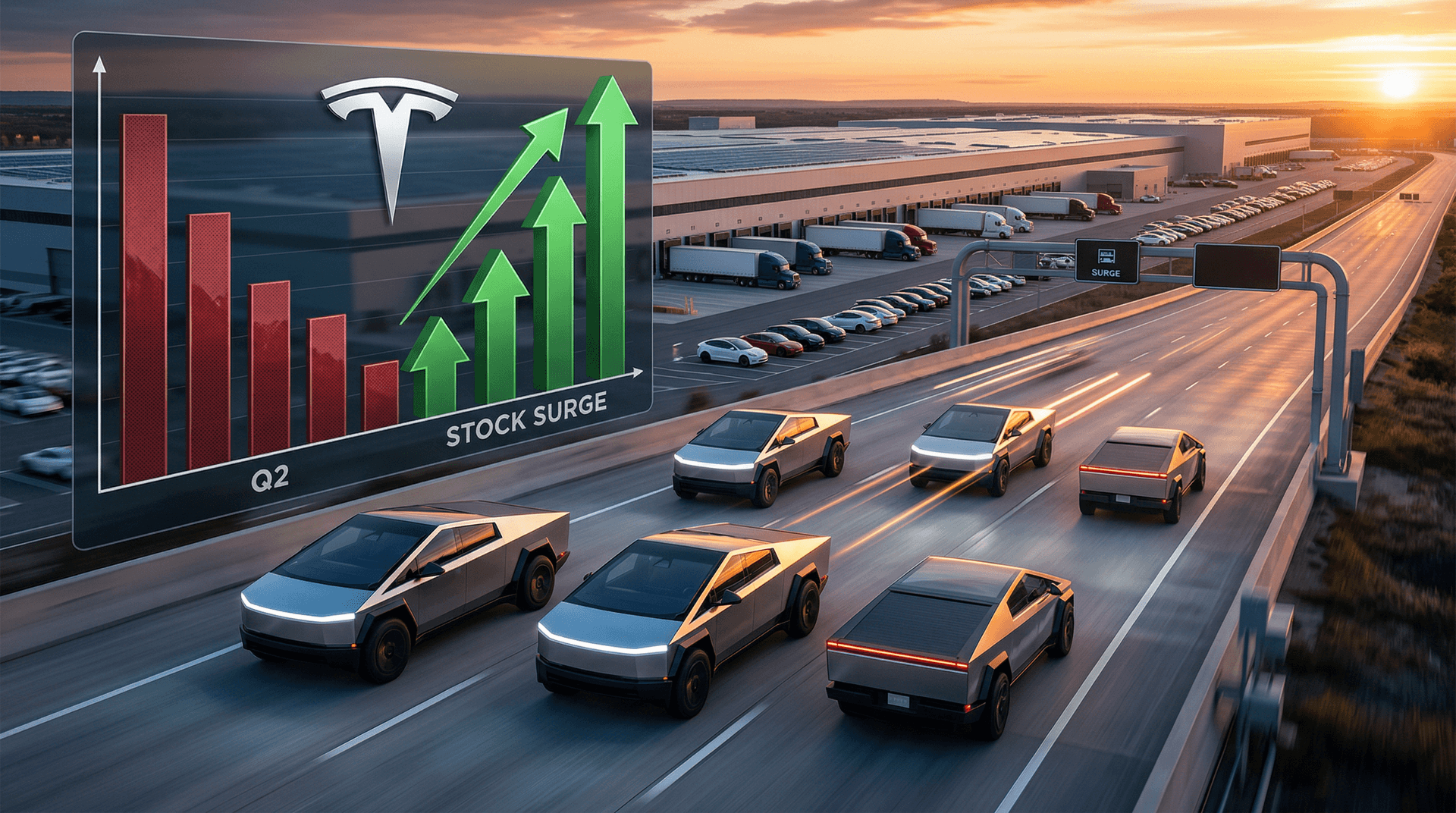
Tesla Inc. released its Q2 2024 production and delivery figures on July 2, revealing a year-over-year drop of 4.8% in deliveries to 443,956 vehicles. This marks the first time in over two years that Tesla has posted consecutive quarterly declines, signaling growing pressures in the global electric vehicle (EV) market. Production for the quarter stood at 410,831 vehicles, down slightly from 479,698 units delivered in Q2 2023.
Missing Expectations, But Stock Surges
Analysts had anticipated around 466,100 deliveries, according to Visible Alpha consensus estimates, making the actual figure a disappointment. However, Tesla shares jumped more than 10% in after-hours trading on July 2, buoyed by better-than-feared results and optimism around new product ramps like the Cybertruck. Year-to-date, Tesla has delivered 830,000 vehicles, putting it on track for a challenging full-year target of 1.8 million units announced earlier.
The decline follows a 9% drop in Q1 2024 deliveries to 386,810 units, attributed to factory retooling for the refreshed Model Y and softening demand. Q2's numbers reflect a sequential improvement of 14.8% from Q1, driven by clearing inventory and aggressive pricing strategies.
| Quarter | Production | Deliveries | YoY Change |
|---|---|---|---|
| Q2 2023 | 479,698 | 466,140 | - |
| Q1 2024 | 433,371 | 386,810 | -8.5% |
| Q2 2024 | 410,831 | 443,956 | -4.8% |
Cybertruck Hits Milestone Amid Production Ramp
A bright spot was the Cybertruck, Tesla's long-awaited electric pickup. Production began late last year, and Q2 saw meaningful deliveries, with Elon Musk noting on X (formerly Twitter) that the stainless-steel beast had reached a production rate of over 1,000 units per week by quarter-end. Tesla did not break out specific Cybertruck numbers, but estimates suggest several thousand were handed over to customers.
The Cybertruck's ramp-up is crucial as Tesla shifts focus from mass-market sedans to higher-margin trucks and SUVs. Priced starting at $60,990 for the single-motor variant, it aims to capture the lucrative U.S. pickup market dominated by Ford's F-150 Lightning and Rivian's R1T.
Price Cuts and Inventory Clearance
To stimulate demand, Tesla implemented multiple price reductions throughout the quarter, including cuts of up to $2,000 on Model Y and Model 3 in key markets. In the U.S., average selling prices dipped below $40,000, pressuring margins but helping move 410,831 produced units with only a modest inventory build.
End-of-quarter inventory stood at around 100,000 vehicles globally, down from peaks earlier in the year. These moves underscore Tesla's strategy to prioritize volume over profitability in a high-interest-rate environment where consumers are financing purchases.
Global Competition Erodes Market Share
The delivery miss highlights intensifying competition, particularly from Chinese rivals. BYD Co., Tesla's fiercest challenger, reported 426,000 battery-electric vehicle (BEV) sales in Q2, nearly matching Tesla despite offering cheaper models like the Seagull at under $10,000. BYD's total new energy vehicle sales hit 1.59 million for H1 2024, surpassing Tesla's 830,000 deliveries.
In Europe, Tesla's market share slipped to 12.9% in June from 18.2% a year earlier, per JATO Dynamics, as local players like Volkswagen's ID.3 and BMW i4 gain traction with subsidies. China's market saw Tesla deliveries drop 3% YoY, squeezed by local incentives favoring domestic brands.
Regional Breakdown (Q2 2024 Estimates):
- U.S.: ~140,000 deliveries (stable, boosted by IRA tax credits)
- China: ~130,000 (down amid local competition)
- Europe: ~90,000 (decline due to subsidy cuts)
- Other: ~84,000
Financial Implications and Earnings Ahead
Tesla's gross margins have compressed from 25.2% in Q2 2023 to an expected 17-18% this quarter, per analyst forecasts, due to price cuts and higher shipping costs. Energy storage deployments hit a record 9.4 GWh, providing diversification as automotive faces headwinds.
Investors await the full Q2 earnings call on July 23, where Musk is expected to update on the delayed Robotaxi event (now slated for October 10) and Full Self-Driving (FSD) progress. Regulatory credits, which added $890 million last year, remain a buffer.
Broader EV Market Dynamics
The industry is grappling with oversupply and slowing growth. Global EV sales rose 25% YoY in Q2 per Rho Motion, but growth is decelerating from 40% in 2023. In the U.S., EV market share held at 7.5%, supported by $7,500 federal incentives under the Inflation Reduction Act.
Tesla's vertical integration—batteries, software, Superchargers—gives it an edge, but rivals are catching up. Ford and GM are ramping Ultium-based EVs, while Hyundai's Ioniq 5 N garners acclaim.
Outlook: Autonomy and Expansion
Musk has tempered 2024 growth expectations, citing Model 2 delays (affordable $25,000 EV now pushed to 2026). Focus shifts to autonomy: FSD v12 wide release and Optimus humanoid robot demos at recent shareholder meeting.
Internationally, Tesla eyes India entry via potential Star factory and Mexico Gigafactory. Shanghai remains a powerhouse, producing half of global output.
Despite Q2 softness, Tesla's $600 billion+ market cap reflects faith in its AI/EV leadership. As competition heats, execution on Cybertruck, energy, and software will define its path.
Word count: 912