In a move that highlights the explosive growth of AI and autonomous systems in national security, Anduril Industries announced on June 5, 2024, that it has raised $1.5 billion in a Series F funding round. The investment values the company at $14 billion post-money, more than doubling its previous valuation from late 2022. Led by Peter Thiel's Founders Fund, the round attracted heavyweights like Sands Capital, Fidelity Management & Research Company, and Baillie Gifford, among others.
This funding comes at a pivotal time for the defense sector, where traditional contractors like Lockheed Martin and Raytheon dominate, but agile startups are disrupting with software-defined hardware and AI prowess. Anduril, founded in 2017 by Oculus VR creator Palmer Luckey, has positioned itself as a counterweight to bureaucratic giants, promising faster innovation for modern battlefields.
The Rise of Anduril: From Oculus to Autonomous Arsenal
Palmer Luckey's journey from Meta (then Facebook) to Anduril is legendary. Kicked out of the VR giant in 2017 over a controversial political donation, Luckey channeled his engineering chops into defense. Naming the company after the flaming sword from The Lord of the Rings, Anduril aimed to forge "software-defined" military hardware—drones, sensors, and AI platforms that learn and adapt like software updates, not clunky Cold War relics.
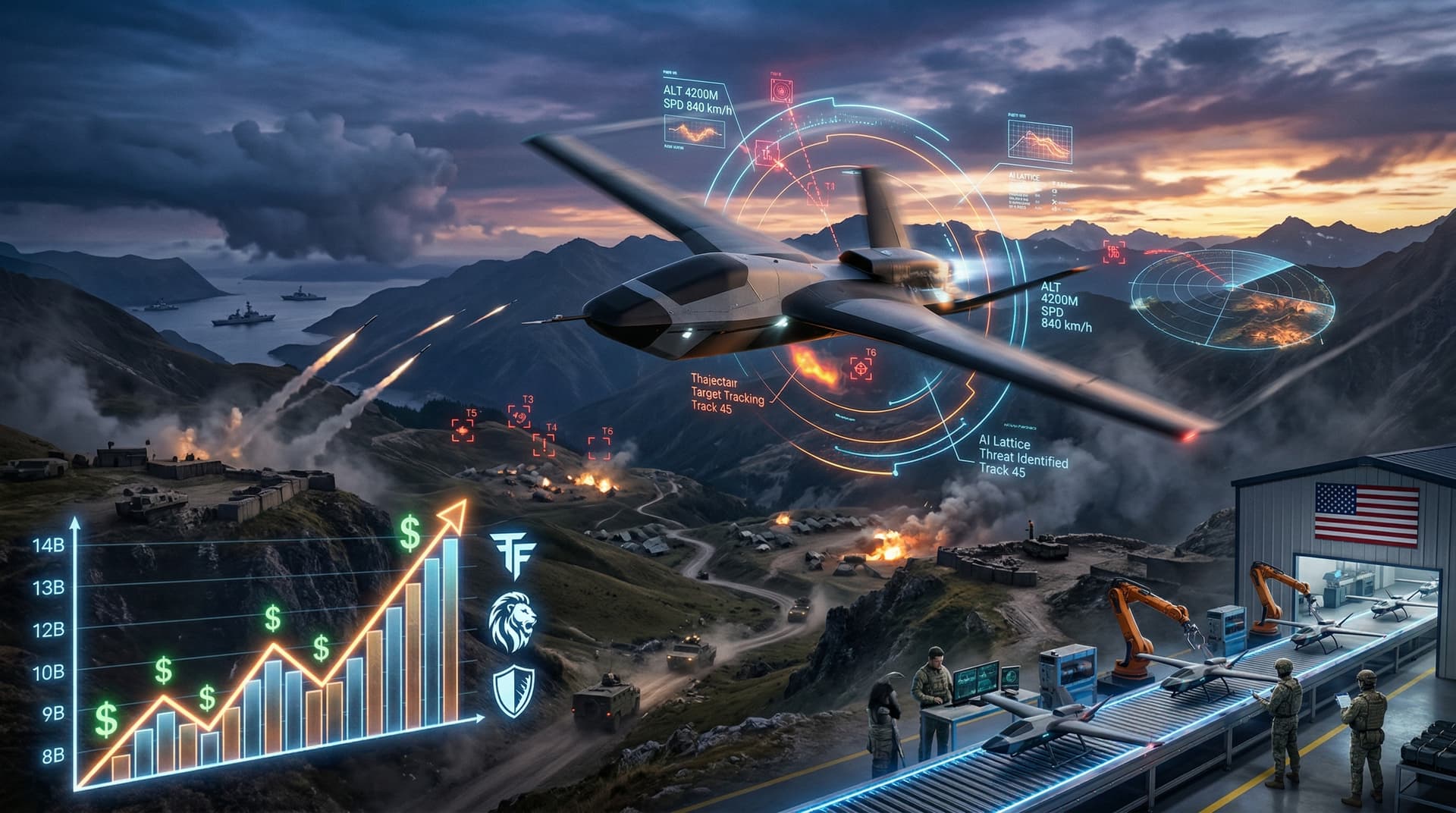
The company's flagship product, Lattice, is an AI-powered operating system that integrates sensors, drones, and effectors into a unified battlefield awareness tool. It uses computer vision and machine learning to detect threats in real-time, from drones to missiles. Recent demos have shown Lattice commanding swarms of Roadrunner drones—reusable, jet-powered munitions that can loiter, strike, and return if the mission aborts.
Anduril's traction is undeniable. It has secured over $1 billion in U.S. Department of Defense contracts, including a major deal for autonomous air defense systems. In Ukraine, its systems have been battle-tested against Russian Shahed drones, proving their mettle in high-stakes environments.
Funding Trajectory: Scaling for the AI Arms Race
This isn't Anduril's first rodeo. The company raised $1.48 billion in its Series E round in December 2022 at an $8.48 billion valuation, led by the same Founders Fund. Cumulative funding now exceeds $2.9 billion, with backers including Peter Thiel (an early investor via Founders Fund), Trae Stephens (co-founder and ex-Palantir), and now fresh capital from NVIDIA—signaling bets on AI hardware acceleration.
"We're building the arsenal of democracy for the 21st century," Luckey said in a statement. "This capital will fuel our mission to deliver decisive advantages to our allies at the speed of software."
The round's structure is notable: It's a mix of primary and secondary shares, allowing early investors and employees to cash out partially while injecting fresh capital for expansion. Anduril plans to double its workforce to over 3,000 employees and ramp up manufacturing at its Ohio factory, which produces counter-UAS systems at scale.
| Funding Round | Amount Raised | Valuation | Lead Investor | Date | |---------------|---------------|-----------|---------------|------| | Series A | $17.5M | - | Founders Fund| 2018| | Series B | $200M | $1.9B | Andreessen Horowitz | 2020| | Series C | $450M | $4.6B | Valor Equity | 2021| | Series D | $200M+ | - | Various | 2022| | Series E | $1.48B | $8.48B | Founders Fund| Dec 2022| | Series F | $1.5B | $14B | Founders Fund | June 2024|
Why Now? Geopolitics Fuels Investor Appetite
Investors aren't pouring billions into defense startups on a whim. Russia's invasion of Ukraine has exposed vulnerabilities in legacy systems—slow procurement, outdated tech. Meanwhile, China's military buildup in the South China Sea and Taiwan Strait demands rapid-response capabilities. U.S. lawmakers, frustrated with Pentagon red tape, are pushing the "Other Transaction Authority" (OTA) to funnel billions to innovators like Anduril.
The Replicator initiative, a Pentagon program to field thousands of cheap, attritable drones by August 2025, plays right into Anduril's wheelhouse. Competitors like Shield AI (with its Hivemind AI pilot), Saronic (maritime autonomy), and Epirus (directed energy weapons) are also raising big, but Anduril leads in scale and contracts.
Peter Thiel, a vocal critic of "woke" Big Tech shying from defense, sees Anduril as Palantir 2.0—data and AI at war's edge. Founders Fund's bet pays off as valuations soar; similar firms like Helsing (European defense AI) hit unicorn status recently.
Challenges Ahead: Ethics, Regulation, and Competition
Not all is smooth skies for Anduril. Critics question the ethics of autonomous lethal weapons, invoking sci-fi nightmares of Terminator-style killers. Luckey counters that human oversight remains paramount—Lattice proposes, operators dispose.
Regulatory hurdles loom: Export controls on AI tech tighten amid U.S.-China rivalry. Scaling hardware manufacturing is capital-intensive; Anduril's pivot to mass production echoes SpaceX's factory obsession.
Competition intensifies. Palantir's AIP platform encroaches on software turf, while traditional primes lobby against upstarts. Yet Anduril's 95% contract win rate on DoD bids shows momentum.
What’s Next for Anduril and Defense Tech?
With $1.5 billion war chest, expect aggressive M&A, international expansion (UK, Australia via AUKUS), and breakthroughs in hypersonics or undersea drones. Luckey eyes public markets eventually, perhaps via SPAC redux or direct listing.
This raise cements Anduril as the vanguard of a $100B+ defense tech renaissance. As global threats mount, startups like it bridge Silicon Valley ingenuity with wartime urgency. Investors betting on Anduril aren't just funding drones—they're backing the future of deterrence.
For HWR News readers eyeing startups, Anduril exemplifies the sector's hottest thesis: AI + hardware in mission-critical domains. Watch this space as valuations climb and battlefields evolve.
(Word count: 912)