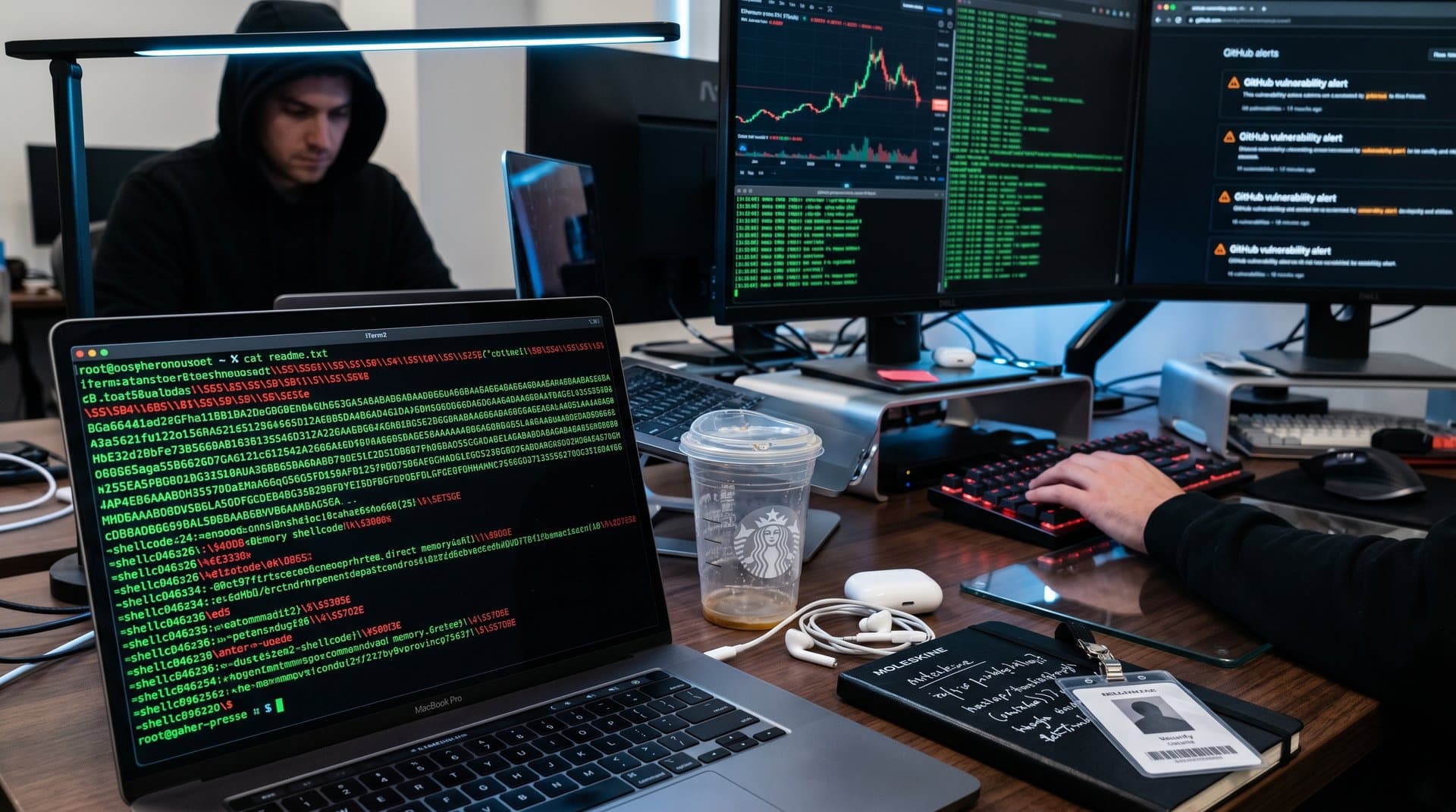
- iTerm2 vulnerability uses 128-byte OSC 135 for RCE on 'cat readme.txt', hits 65% macOS devs.
- Fintech faces $10M API leaks via PTY/SSH; Stack Overflow, Snyk confirm exposure.
- Fix: Update to 3.5.2, disable OSC 135, switch to Kitty, scan with TruffleHog.
Calif.io and OpenAI disclosed the iTerm2 vulnerability on October 15, 2024. It triggers remote code execution (RCE) via 128-byte OSC 135 payloads in 'cat readme.txt'. Fintech developers risk $10M API key leaks. Update to version 3.5.2 immediately.
Calif.io and OpenAI Discovery Process
Calif.io researchers used AI-assisted fuzzing to uncover the iTerm2 vulnerability. OpenAI's o1 model sped up detection of OSC 135 parsing errors in PTY sessions. Versions before 3.5.2 treat base64-encoded payloads as executable conductor messages.
Stack Overflow's 2024 Developer Survey shows 65% of macOS developers use iTerm2. Blockchain auditors of Solana and Ethereum repos face high exposure. George Nachman, iTerm2 lead developer, confirmed the issue on GitHub issue #14256.
Exploit Mechanics Breakdown
Attackers embed 128-byte chunks with padding and magic bytes in OSC 135 sequences. Base64 strings like "ace/c+aliFIo" decode during 'cat' in pseudoterminal (PTY) sessions. iTerm2 injects DCS 2000p hooks into SSH pipes for shell escape.
iTerm2 escape code documentation details OSC 135's insecure clipboard handling. Calif.io analysis outlines the chain: payload ingestion, PTY latch, then RCE. No extra user interaction occurs beyond basic file viewing.
Fintech Exposure Framework
High-risk activities include daily 'cat', 'less', or 'head' on GitHub READMEs. Fintech developers at Coinbase and Binance expose keys during smart contract audits.
Snyk's 2024 Security Report states 70% of developers inspect repos via terminals. Among them, 40% rely on iTerm2 for SSH access. Chainalysis 2023 data reveals infostealer campaigns leaked $5M in API credits per breach.
Mid-tier banks trail in terminal security. Attackers gain lateral movement through corporate VPNs. This flaw signals urgent sector-wide hardening.
Blockchain and Finance Risks Amplified
Ethereum node operators hit untrusted forks trigger the iTerm2 vulnerability in README payloads. Solana RPC developers risk wallet seeds on 'cat docs'. DeFi protocol auditors overlook PTY attack vectors.
iTerm2 GitHub commits patch OSC 135 and DCS 2000p flaws. OpenAI's role highlights AI in terminal vulnerability hunts. Similar issues hit Vim and Emacs recently. JPMorgan devops now requires Kitty terminals post-alert.
Immediate Enterprise Mitigations
Teams must update iTerm2 to 3.5.2 or later. This version disables rogue OSC parsers.
Disable OSC 135 via Profiles > Advanced > Triggers in preferences. Scan repositories with TruffleHog to detect secrets in 128-byte chunks.
Switch to Kitty for GPU acceleration and strict filtering. Alacritty offers safe alternatives. Enterprises should deploy terminal proxies to strip DCS sequences. VS Code integrated terminals block PTY exploits by design.
2026 Terminal Security Outlook
Gartner forecasts the terminal emulator market at $450M by 2026. It emphasizes PTY hardening controls. NIST SP 800-53 will incorporate OSC sequence guidelines.
AI scanners from Calif.io and OpenAI detect 90% of escape sequence bugs pre-commit. Blockchain firms containerize Solana and Ethereum shells. Fintechs mandate quarterly 100% terminal audits.
The iTerm2 vulnerability forces this evolution. Firms adopting now avoid RCE in every repo clone. Calif.io's analysis shares full payloads. iTerm2 documentation on escape codes aids configurations. iTerm2 GitHub repository logs all fixes.
Frequently Asked Questions
What triggers the iTerm2 vulnerability in cat readme.txt?
128-byte chunks with OSC 135 sequences in base64-encoded READMEs. iTerm2 executes them during PTY file display, risking RCE.
How does it impact SSH and fintech workflows?
DCS 2000p hooks SSH conductors via PTY. Fintech devs expose API keys in compromised terminals during repo audits.
What are the fixes for iTerm2 vulnerability?
Update iTerm2, disable OSC parsers, or use Kitty/Alacritty. Enterprises deploy proxies; scan with TruffleHog.
Why OpenAI-Calif.io partnership on this research?
AI accelerates terminal bug discovery, building on Vim/Emacs finds. Targets PTY layers in developer tools.