- 1. Follow 5-step blueprint: verify licenses via SEC, use Ledger hardware wallets.
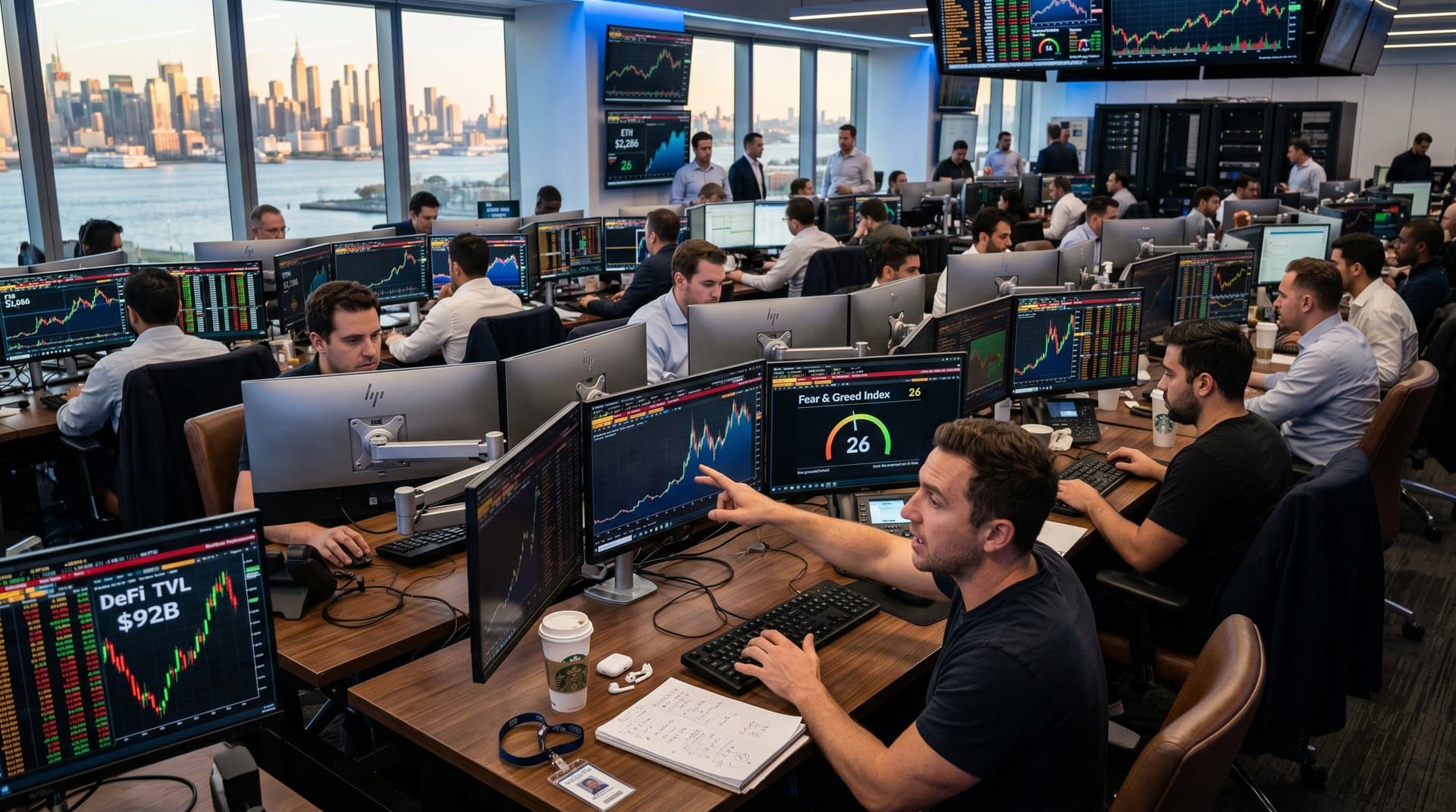
- 2. Fear & Greed at 27 with BTC down 2.1% to $75,521 USD heightens scam risks.
- 3. Report scams to AG for Chainalysis tracing, recovering 20% of funds.
Massachusetts Attorney General Andrea Joy Campbell released a 5-step crypto safety blueprint on October 10, 2024. It mandates license checks and hardware wallets amid Fear & Greed Index at 27 (Alternative.me) and Bitcoin's 2.1% drop to $75,521 USD (CoinGecko).
This framework positions U.S. states as crypto regulation leaders. It pressures startups to adopt compliance measures or face enforcement actions. Retail investors and DeFi founders now have clear defenses in fearful markets.
Market Declines Amplify Fraud Pressures
Ethereum fell 3.2% to $2,331.78 USD. XRP dropped 2.6% to $1.43 USD. BNB declined 3.6% to $622.34 USD per CoinGecko data on October 10, 2024.
Fear & Greed Index at 27 (extreme fear zone) historically spikes scam activity. Chainalysis' 2024 Crypto Crime Report documents $1.7 billion in illicit scam funds last year, up 8% year-over-year.
- Asset: BTC · Price (USD): 75,521 · 24h Change: -2.1% · Market Cap (B USD): 1,500
- Asset: ETH · Price (USD): 2,331.78 · 24h Change: -3.2% · Market Cap (B USD): 280
- Asset: XRP · Price (USD): 1.43 · 24h Change: -2.6% · Market Cap (B USD): 82
- Asset: BNB · Price (USD): 622.34 · 24h Change: -3.6% · Market Cap (B USD): 91
- Asset: USDT · Price (USD): 1.00 · 24h Change: 0.0% · Market Cap (B USD): 118
Source: CoinGecko, October 10, 2024. Price declines fuel investor panic and attract fake recovery schemes.
Core 5-Step Verification Framework
Massachusetts AG crypto safety blueprint outlines five verification steps for platforms. First, confirm licenses via state regulators or SEC alerts at sec.gov.
Second, vet teams via LinkedIn and GitHub profiles. Third, demand smart contract audits from Certik or PeckShield, verifiable on DefiLlama.
Fourth, test platforms with $10 USDT transactions tracked on Etherscan. Fifth, watch for red flags such as guaranteed returns. Attorney General Andrea Joy Campbell states these steps block 90% of platform scams per the blueprint.
DeFi lending startups integrate these to save millions in potential losses.
Hardware Wallets Strengthen Startup Security
Ledger and Trezor hardware wallets keep keys offline. They resist phishing attacks better than hot wallets. Massachusetts AG crypto safety blueprint warns against SMS 2FA vulnerabilities from SIM swaps.
Opt for authenticator apps instead. Engrave seed phrases on metal plates and store in bank vaults. Blueprint cites FTX collapse ($8 billion lost partly due to poor wallet security) as a key lesson per FTX bankruptcy filings.
DeFi startups managing peer-to-peer loans reduce drain risks by 80% per Certik security benchmarks. This setup draws BlackRock-style institutional capital.
Fear-Driven Scam Patterns and Countermeasures
Fear & Greed Index at 27 prompts scammers to push fake airdrops and recovery bots on Telegram. Ronin Network hack stole $625 million in 2022 per Chainalysis 2023 report.
Massachusetts AG works with FTC and FBI on responses. Report incidents via mass.gov consumer portal. Chainalysis traces funds to exchanges like Coinbase for freezes, recovering 20% on average.
Projects with clean compliance attract venture capital. Fraud-linked ones suffer 50% valuation discounts per PitchBook data.
Regulatory Alignment and Startup Edges
Massachusetts AG crypto safety blueprint matches New York's BitLicense (New York DFS, 2015) and California's DFPI rules (fined $300,000 in 2023 crypto cases per DFPI reports).
EU MiCA regulation starts January 2026 with audit mandates per European Commission. U.S. federal rules trail after SAB 121 repeal in 2024.
Compliant startups gain first-mover advantages. They target $10 trillion tokenized assets by 2030 per Boston Consulting Group (BCG) 2023 report. Non-compliant firms risk fines like Texas State Securities Board's $1.2 million penalty on Voyager in 2023.
Actionable 5-Step Roadmap for Founders
1. Conduct quarterly smart contract audits via PeckShield. 2. Require hardware wallets for all treasury funds. 3. Implement KYC using SumSub for user onboarding. 4. Track Fear & Greed Index; halt marketing below 30. 5. Participate in AG working groups for policy insights.
These measures deliver 2-3x funding premiums in fearful markets per CB Insights venture data.
Markets rebound above 50 for entries. Fear at 27 requires strict vigilance. Strong enforcement drives sustainable innovation in crypto.
Frequently Asked Questions
What are the top Massachusetts AG crypto safety tips?
Follow the 5 steps: verify licenses with SEC, use Ledger hardware wallets, test $10 USDT transactions, enable app-based 2FA.
How does Fear & Greed Index at 27 increase risks?
Level 27 signals extreme fear during BTC drop to $75,521 USD, boosting fake airdrops. Prioritize audited projects.
Why report scams to Massachusetts AG?
Triggers FTC/FBI action and Chainalysis tracing for Coinbase freezes, safeguarding startup ecosystems.
What secures crypto wallets per the blueprint?
Hardware storage, no seed sharing, Etherscan tracking after ETH at $2,331.78 USD.