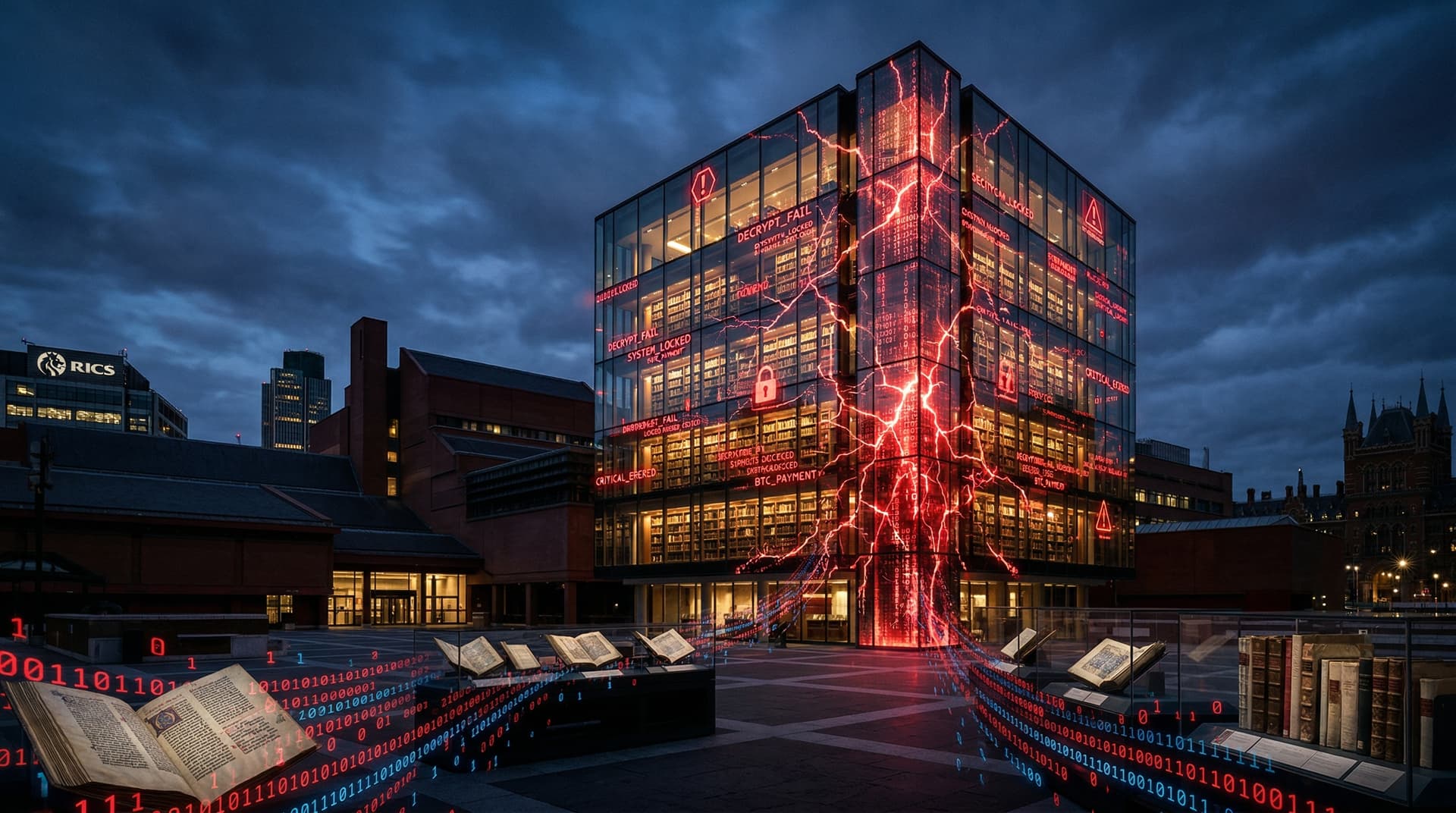
London, November 6, 2023 – One of the UK's premier cultural institutions, the British Library, has become the latest victim of a sophisticated ransomware attack. The incident, which began on October 28, has left vast swathes of the library's digital infrastructure inaccessible, disrupting services for researchers, staff, and the public alike.
The Attack Unfolds
The cyber intrusion was first detected late last month when the library's Wi-Fi networks, websites, and several internal systems suddenly went dark. Visitors attempting to access online catalogues or digital collections encountered error messages, while on-site services were severely limited. By November 2, the Rhysida ransomware group, a relatively new but aggressive cybercrime outfit, claimed responsibility on their dark web leak site.
Rhysida, which emerged earlier this year, boasted of exfiltrating approximately 600 gigabytes of data from the British Library's servers. The stolen trove reportedly includes personal information on current and former staff, applicant data, scanned images of rare manuscripts, and contact details of registered readers. Sample files released by the hackers confirm the breach's severity, featuring HR documents, email archives, and proprietary research materials.
In a now-familiar extortion playbook, Rhysida has issued an ultimatum: pay a ransom in cryptocurrency, or watch the full dataset auctioned off to the highest bidder on underground forums. The library has categorically rejected these demands, aligning with UK government guidance that discourages ransom payments to cybercriminals.
Rhysida: A Rising Threat
The Rhysida group has quickly established itself as a formidable player in the ransomware-as-a-service (RaaS) ecosystem. Active since May 2023, they have targeted high-profile entities across sectors, including healthcare providers and manufacturing firms. Their operations mirror those of LockBit and Conti, employing double-extortion tactics—encrypting data for disruption and stealing it for leverage.
Security researchers from firms like Sophos and Recorded Future note Rhysida's preference for Windows-based intrusions, often exploiting unpatched vulnerabilities or phishing emails. In the British Library case, initial investigations point to a phishing campaign as the likely entry point, though full attribution awaits forensic analysis.
This attack underscores the vulnerability of non-profits and public institutions, which often lag behind private enterprises in cybersecurity investments. The library's reliance on legacy IT systems, combined with the vast troves of sensitive historical data, made it an attractive target.
Library's Response and Impact
The British Library acted swiftly upon detection, isolating affected networks and engaging cybersecurity specialists from NCC Group. Public-facing websites remain down, redirecting users to a status page with updates. Researchers relying on the library's 170 million-plus collection items face indefinite delays in accessing digital archives.
Rosie Hendry, the library's chief executive, addressed the crisis in a statement: "Our priority is to restore services safely while protecting our users' data. We will not negotiate with criminals." Staff have been advised to monitor for identity theft, as leaked personal details could fuel phishing or fraud campaigns.
The downtime has ripple effects. Academics worldwide, from historians poring over medieval manuscripts to linguists studying ancient texts, are scrambling for alternatives. Partner institutions like the BBC and universities have expressed solidarity, but the loss of access hampers ongoing projects.
Financially, recovery costs could run into millions, covering incident response, system rebuilds, and potential legal fees if data misuse leads to lawsuits under GDPR. The UK government's Cyber Security Breaches Survey highlights that 39% of businesses faced cyber incidents last year, with cultural sectors increasingly in the crosshairs.
Broader Implications for Cybersecurity
This breach arrives amid a surge in ransomware activity. Q3 2023 saw a 20% uptick in attacks globally, per Chainalysis reports, driven by maturing RaaS models and geopolitical tensions. Nation-state actors may inspire copycats, but Rhysida appears purely profit-motivated.
For cultural heritage organizations, the stakes are uniquely high. Digitized treasures—irreplaceable artefacts like the Magna Carta or Beatles lyrics—represent humanity's shared knowledge. A leak could invite not just financial extortion but intellectual property theft or ideological defacement.
Experts urge multi-layered defenses: zero-trust architectures, regular backups tested for integrity, and employee training. The British Library incident reinforces calls for sector-specific cybersecurity frameworks, perhaps modeled on the US's CISA guidelines.
Looking Ahead
Restoration efforts continue around the clock. Partial services may resume soon via air-gapped systems, but full recovery could take weeks or months. Law enforcement, including the National Crime Agency, is investigating, though apprehending Rhysida operatives remains challenging given their likely overseas bases.
As the dust settles, this attack serves as a stark reminder: in our digital age, even the guardians of history are not immune. Institutions must fortify their defenses, or risk losing access to the very knowledge they preserve.
HWR News will update this story as new details emerge.
(Word count: 912)